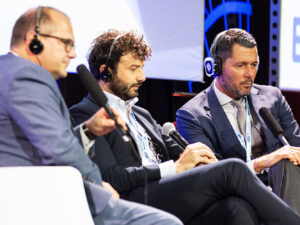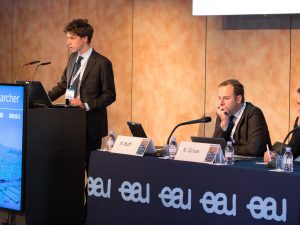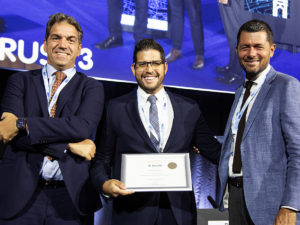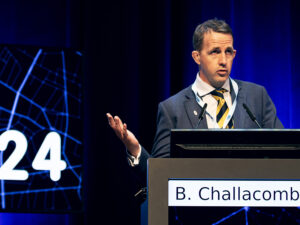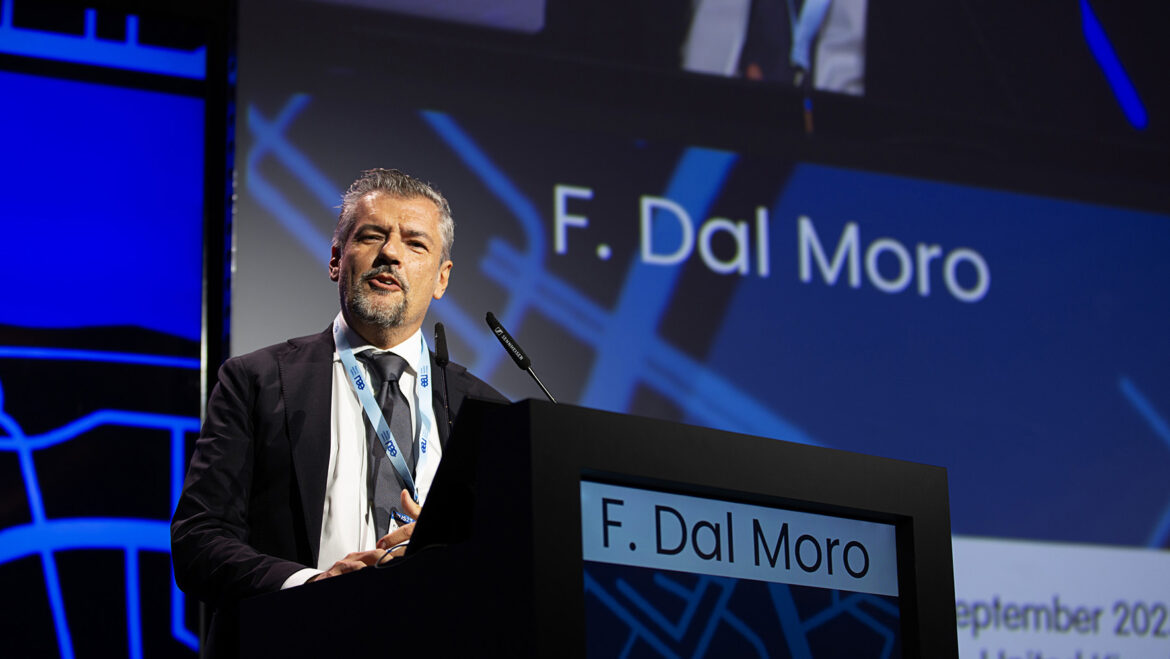
Preparations are underway for ERUS26, the 23rd edition of the EAU Robotic Urology Section’s Annual Meeting. The meeting marks a return to Padua, Italy on 9-11 September 2026. We spoke to Prof. Fabrizio Dal Moro, Head of Urology at Padua University Hospital on behalf of the local organisers to get an idea of what delegates can look forward to this summer!
The spirit of the Olympic Games
“We are excited, obviously, to be hosting this great event. It’s not the first time that Padua hosts the ERUS meeting, we hosted in 2009 as well, but this will be the first time in this new era now that ERUS is part of the EAU. We are working closely together with Prof. Alberto Breda, ERUS chair, and with his enthusiasm and guidance we are planning what will be a spectacular edition of ERUS.”
“The scientific programme is focused on live surgery: we anticipate 48 live cases. We cannot yet confirm a number, but it’s safe to say that more than four different platforms are going to be used as part of the live surgery programme. This is always extremely interesting and it’s important to collect different experiences as these systems are introduced in Europe.”
“Our decision was to not only to concentrate on Padua, but also embracing and involving other important Italian robotic centres. Similar to how Italy recently hosted the Winter Olympics across various cities: we will involve Padua, but also centres from Bologna, Milan, Turin and Rome (more to be confirmed), in order to have the top experts performing live surgery.”
“Visiting surgeons will operate in these cities in addition to Padua, and the cases are transmitted to Padua. Another possibility we are looking at is that the surgeon’s console is in Padua and the patient in Rome or Turin or elsewhere. If we achieve this for ERUS26, it could be a first in Italy. In any case, telesurgery will be part of the programme. A lot of the newer platforms support it, it’s becoming commonplace for many colleagues around the world.”
“But ERUS is more than live surgery: it’s important to consider that we are also organising around 20 lectures, covering the state of the art of the different aspects of robotic urology. It’s important to considering the cutting-edge technologies we have at our disposal, but equally important are the novelties in terms of surgical approaches, which are constantly evolving.”
- Abstract submission is currently open. Submit yours by 12 June!
 RUBIC2026: Satellite Event RUBIC2026: Satellite Event
“We are also using this occasion to organise a satellite event, dedicated especially to young urologists and residents. The Robotic Urology Breakthrough Innovation Challenge, or RUBIC, is a competition, about new ideas involving robotic surgery but also AI, such as digital twins innovative use of VR, and so on.” “The competition is open to teams that should feature at least one young urologist Teams should submit a pitch that describes the problem addressed, the proposed solution and its innovation, the potential clinical or market impact, and the vision of its future development.” “Of all the submitted pitches, the top five will present in front of a jury at ERUS26 and stand to win a European Robotic Urology Fellowship path: a visit to various robotic urology centres including a visit to the Italian Institute of Technology (IIT) in Genoa, involvement of IIT. This is the most important institute in Italy dedicated to robotic surgery.” Several Italian tech industries will also be supporting the project and representatives of the IIT and these industries will be part of the jury. This really provides an opportunity to meet these different people and have direct contact with these industries.” |
Potential of 3D models
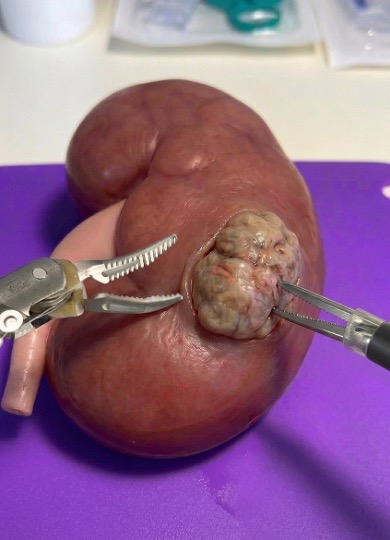 “There’s a lot of potential for digital 3D modelling, simulation and digital twins, but physical models are another area where we are seeing innovation. In Italy we have a lot of leaders in the 3D modelling industry that could be part of our scientific programme and the Exhibition.”
“What we’d like to demonstrate at ERUS26 is the concept of creating a physical 3D model, customised for a specific patient. Surgeons would start the case by operating on the model, in challenging or complex cases, and then translating the experience into live surgery. Comparing the live case with the one performed on the model in real time would be a very interesting demonstration.”
“Beyond the technical novelty, this is also a new step in surgery. If you consider the legal aspects, it’s important that the surgeon is well-prepared and skilled on a specific case. It offers a way for the surgeon to do a dry run of a challenging case. It’s not a generic training model, but specifically dedicated to a complex case, in order to improve our ability to manage this specific case and prevent surprises and complications.”
“This technology also opens up the possibility of different surgeons operating on the same simulated patient, showing their approaches. In a critical case, you could create the model, you send it to a skilled surgeon, who would then demonstrate best way to manage the case.”
Padua as an inspiring setting
“We’re in an age where you can access so much information and training and learning remotely. But I still think events like ERUS and host cities like Padua make the difference.”
“ERUS26 involves so many different levels: we invite residents in order to teach, and to create a mindset dedicated specifically to robotic surgery, that’s distinct from open surgery. This meeting caters to the young, but also to the top level of urologists and cutting-edge technologies: complex cases, embracing all fields from kidney, bladder, prostate, maybe also paediatric robotic surgery.”
“Being there in-person is essential for offering the best educational experience. It’s important to get hands-on with the systems, but also to meet people, not only urologists, but also industry, to create pragmatic translational research. ERUS26 will offer direct contact with people that can help us create a technological start-up. For a young resident, it’s a tremendous opportunity. In a sense we are creating a family, the next generation of surgeons.”
“We have the second oldest university in Italy and Andreas Vesalius was a professor here nearly five hundred years ago. He was the first to perform sections in a scientific way, writing books that changed the field forever. Padua is seen as the cradle of modern anatomy. And let’s also not forget that the EAU’s very first Annual Congress was in Padua in 1974, hosted by Prof. Ravasini.”
“ERUS26 is an opportunity not just to watch a series of interesting live cases, but also for networking, meeting people with different backgrounds from the four corners of the world. I hope that the spirit of the city, its culture, its strong academic history and its embracing of different cultures will make this the most successful ERUS meeting yet!
- Early Registration for ERUS26 is open until 12 June.
- Separate programmes and registration fees are available for residents, young urologists and nurses. Explore the ERUS-YAU Robotic Working Group Programme and ERUS-EAUN Robotic Urology Nursing Meeting