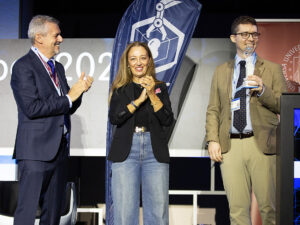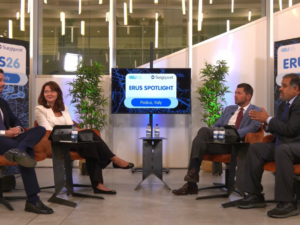
ERUS26 is the 23rd edition of the EAU Robotic Urology Section’s annual meeting. In addition to an impressive live surgery programme and all the latest cutting edge robotic technology, the meeting features ESU Courses, a nurses’ programme and, notably, a special day-long programme on 11 September that caters specifically to the needs of young robotic urologists.
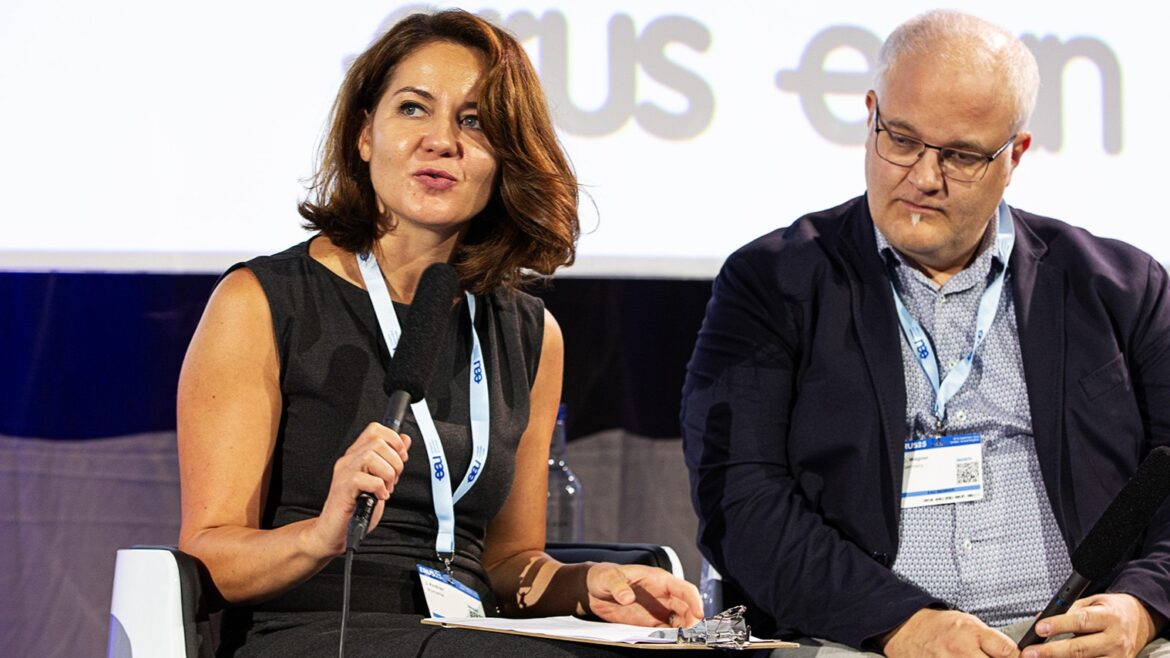
We spoke to Dr. Iulia Andras (Cluj, RO), chair of the Young Academic Urologists Working Group on Robotics in Urology, which is taking the lead with the ERUS-YAU programme in Padua. The programme has its own abstract sessions and delegates can submit as long as they are aged 40 or under. The deadline for all ERUS26 abstract submissions is 12 June.
Young urologists’ needs
Several factors apply to robotic urologists at the beginning of their careers, and these are addressed specifically in the ERUS-YAU programme. Dr. Andras explains:
“For young urologists entering robotic surgery today, three priorities come to mind: acquiring structured training, finding mentorship, and understanding where the field is heading.”
“Robotic surgery is evolving rapidly, and it can sometimes feel overwhelming for trainees. That is why educational pathways such as the ERUS curriculum are so important. We wanted the programme to provide not only inspiration but also practical guidance on how to progress from trainee to independent robotic surgeon.”
“At the same time, young colleagues need exposure to new technologies, whether that is AI, advanced imaging, telementoring, or new robotic platforms. Understanding these developments early helps them prepare for the future of our specialty.”
“Finally, meetings like ERUS are about people. Building professional networks, meeting mentors, finding collaborators, and sharing experiences with peers are all essential parts of career development, and I think the YAU community provides a very supportive environment for that.”
Highlights from this year’s programme
Getting acquainted with the latest technology is something that’s important for all participants at ERUS, but even more so for urologists who are finding their way and looking to the next decades.
Dr. Andras: “Overall, I think the scientific programme strikes a good balance between innovation, education, and practical surgical training. I am also excited about how future-oriented this year’s programme is. We have several talks that focus on technologies that are already transforming robotic surgery, such as artificial intelligence, hyperspectral imaging, advanced intraoperative imaging, and telesurgery.”
“One lecture I am especially looking forward to is [ERUS Chair] Prof. Alberto Breda’s presentation on making telesurgery a clinical reality. It addresses a topic that many of us have been discussing for years and that is now becoming increasingly relevant in clinical practice. I am also enthusiastic about the sessions on AI and the use of 3D models for individualised surgical planning, as they highlight the future of personalised surgery and the transformative possibilities ahead for our field.”
“At the same time, we were determined to keep the programme firmly grounded in practical learning. That is why we included the hour-long step-by-step robot-assisted radical cystectomy session with moderators and experts guiding participants through an entire procedure—from patient positioning and surgical technique to reconstruction and the management of complications. This provides insights that can be directly applied in clinical practice and therefore particularly valuable for trainees and early-career surgeons seeking to build confidence and expertise.”
“What makes the ERUS-YAU programme truly special is its educational philosophy: for young surgeons, by young surgeons. There is immense value in learning from colleagues who have recently navigated the challenges of the learning curve themselves. Their experience, practical tips, and relatable perspective can inspire and accelerate the development of the next generation of surgeons, helping them approach complex procedures with greater confidence, skill, and ambition.”
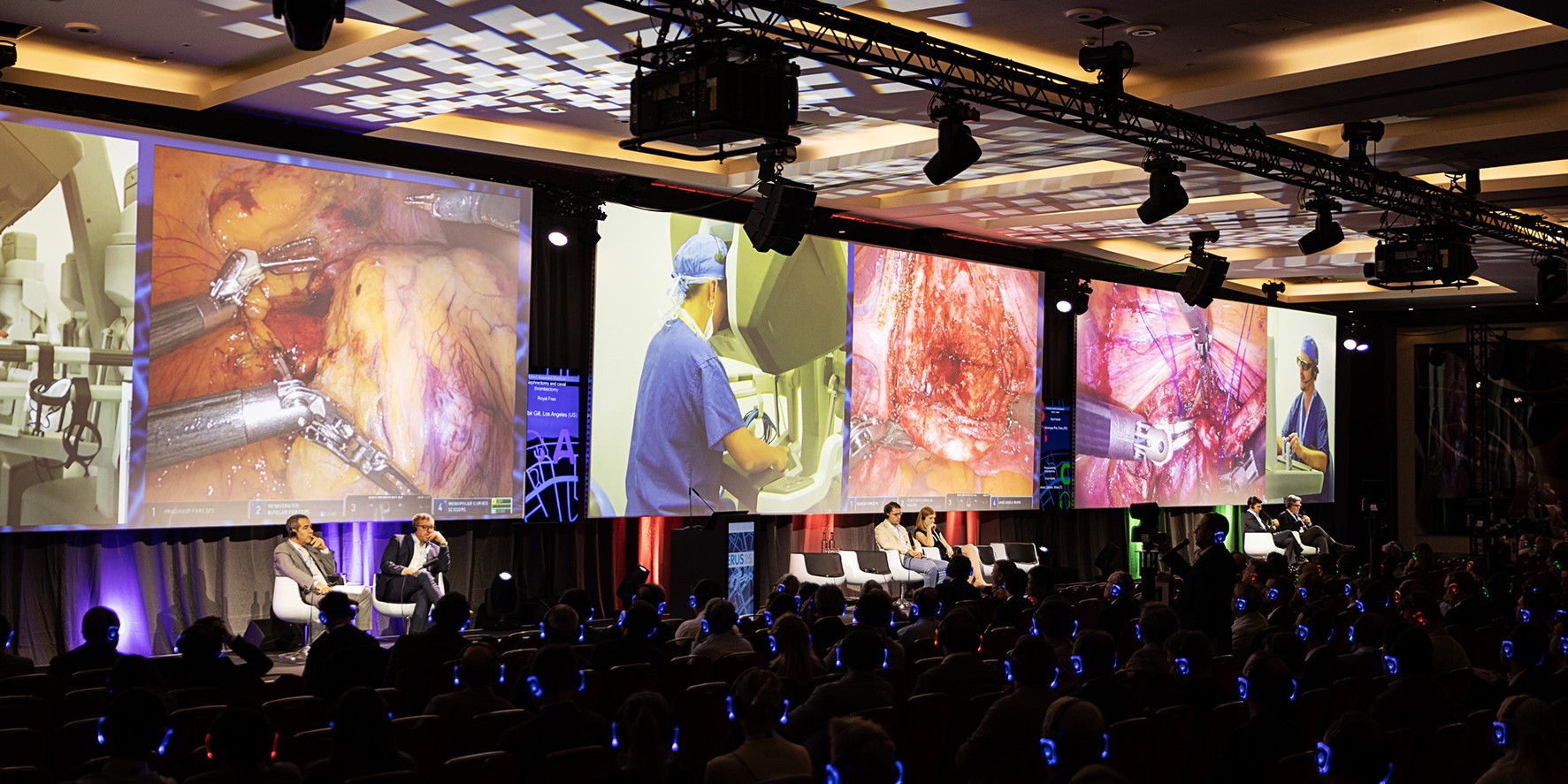
Expert-moderated live robotic surgery is the cornerstone of ERUS26.
Robotics and young urologists: a special connection?
While the ERUS meeting is unique in its long-time inclusion of a “Junior” programme, Dr. Andras does not necessarily think that robotic urology is, compared to other subspecialties, uniquely appealing to younger urologists:
“I think robotic urology has a unique appeal for many young surgeons because it combines technical innovation, minimally invasive surgery, research, and continuous learning. It is a field that is constantly evolving, which makes it very exciting.”
“That being said, I would not necessarily say it attracts more young urologists than every other subspecialty. Urology is fortunate to offer many fascinating career paths. What I do think is that robotic surgery has become an increasingly important part of modern urological practice, and many young colleagues recognise that developing robotic skills will be valuable regardless of their eventual subspecialty focus.”
- Special registration rates are available for Junior EAU members, residents and medical students. An ERUS26 registration entitles them to both the ERUS-YAU Programme on September 11th as well as the rest of the ERUS26 scientific programme, including four ESU courses. Discounted early registration is available until 12 June.Only interested in attending the ERUS-YAU Meeting? Register for a day registration! Please contact the Registrations Department for more information.
The appeal of ERUS26
In addition to chairing the ERUS-YAU Programme on Friday, Dr. Andras will be attending the regular ERUS26 sessions: “I look forward to attending ERUS26 in Padua because the ERUS meeting is always one of the highlights of the year. It brings together an outstanding international community of surgeons, researchers, and trainees.”
“Personally, I am especially interested in developments related to artificial intelligence, advanced imaging technologies, telesurgery, and telementoring. These are areas that have the potential to fundamentally change how we train surgeons and deliver patient care. I am also very interested in seeing how new robotic platforms and single-port technologies continue to evolve. Competition and innovation in this space will ultimately benefit both surgeons and patients.”