Telesurgery has the potential to radically change the way surgeons operate in the coming years, says ERUS Chairman Prof. Alberto Breda. ERUS26 will light the way for the field and offer a preview of what could soon be a reality for robotic surgeons. The 23rd edition of the EAU Robotic Urology Section (ERUS) meeting is set to take place in Padua on 9-11 September, 2026. Registration is still open, the regular fee is available until 26 August.
The surgery and technology-heavy meeting features 11 live surgery sessions in its scientific programme, and almost as many different robotic platforms. Eight of the 53 cases will be telesurgical procedures, with patient and surgeon in different locations.
As preparations were nearing their final stages and surgical cases were confirmed, we spoke to ERUS Chairman and Padua native Prof. Alberto Breda (Barcelona, ES) about the many innovations in robotic (tele)surgery that delegates can expect at ERUS26.
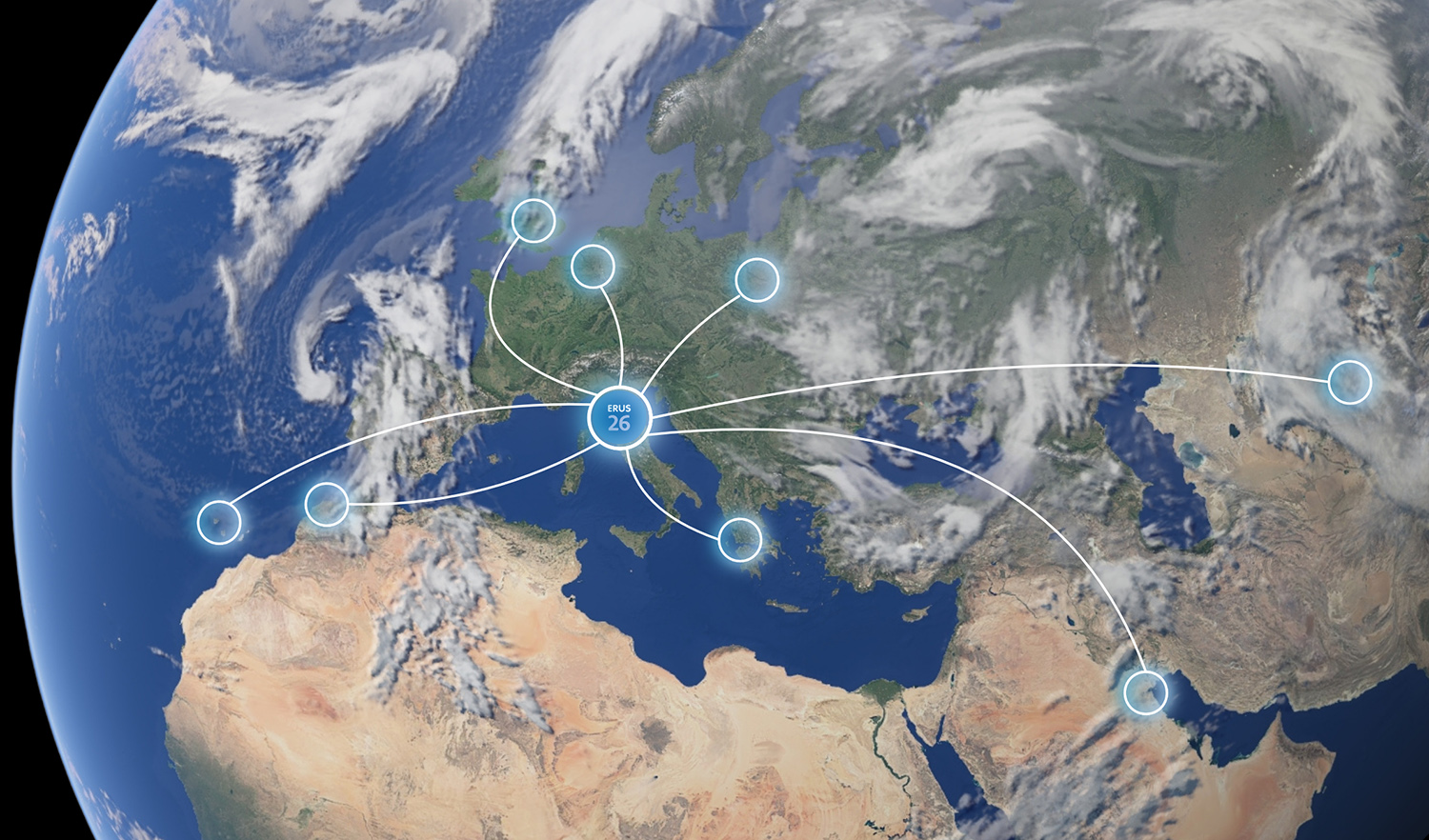
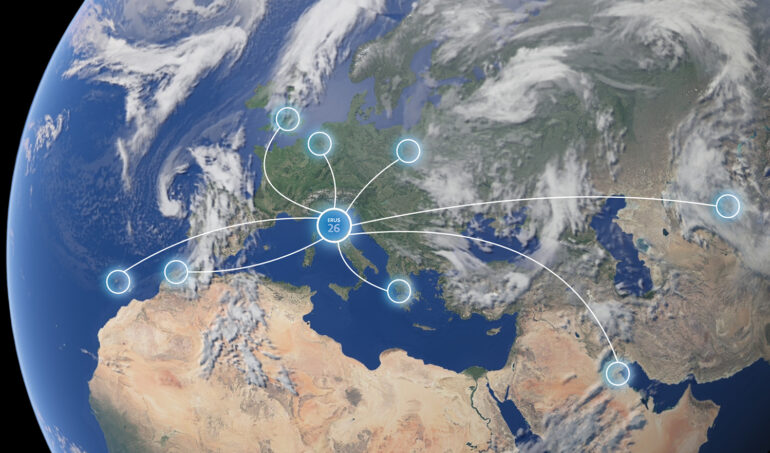
Telesurgery will connect Padua (center) with (from left to right): Las Palmas, Casablanca, London, Aalst, Athens, Warsaw, Kuwait, and Tashkent.
Telesurgery in all directions
“Only two years ago, at ERUS24 in Bordeaux we had our very first telesurgical case at an EAU event. Last year in London, we had three cases as part of the scientific programme. This year at ERUS26, we are set to feature eight telesurgical cases, mostly with the surgeons working on consoles at the venue in Padua. Some telesurgical cases will be transmitted to us, with surgeon and patient in different locations. The telesurgical cases will be performed on Microport Toumai and Edge Medical systems.”
“Using consoles at the congress venue in Padua, we are connecting to systems and patients in Warsaw, Casablanca, London, Las Palmas de Gran Canaria, Kuwait, Tashkent, Aalst, and Athens. We are connecting in every direction from Italy, connecting to the rest of Europe, to Asia and to Africa.”
“The consoles for the telesurgery will be in the venue. You could potentially even have the console on stage, and this has been done at some events, but we felt that in terms of ethics and compliance, it would be too much of a show. We are a scientific society and I think the value of the telesurgery is not the show of the surgeon performing on stage but the value is what telesurgery allows us to help others.”
New systems coming to Europe
“The Intuitive Da Vinci 5 system (DV5) was recently introduced to Italy so we will have two centers retransmitting live surgery to our meeting: Niguarda Hospital in Milan and Negrar Sacred Heart in Verona. The Da Vinci SP will be demonstrated from Milan, Negrar and the Abano Terme clinic in Padua. Both systems will be heavily featured in the programme as surgeons are keen to learn more of their colleagues’ experiences of these new systems.”
“For the first time at an ERUS meeting, we will have another single-port system, the Edge Medical SP1000 which was recently approved for use in Europe. This system has unique wrist articulation which offers more freedom of movement for the surgeon and compensates for some of the difficulties associated with single-port surgery. We hope to have a live demonstration of this system, possibly even as a telesurgical case.”
“A system that will be well-represented in our scientific programme, because a lot of Italian centres use it is the Medtronic Hugo RAS. This year it also received FDA approval, so it is now on sale in the USA and the first American surgeons have been using it. At the NARUS-SRS joint session on Wednesday we will hear from the US experiences with the newer system.”
Changing vision on telesurgery
“My personal vision of telesurgery has also been changing. When we first started with proofs of concept three years ago, I thought it would mainly have a ‘humanitarian’ purpose, a way of offering medical care to remote or less developed parts of the world. This is certainly still a factor, and a reason for us to work together with the Pan-African Urological Surgeons’ Association to increase adoption of robotic systems on the continent.”
“However, in recent years I have seen other potential benefits of telesurgery that may turn out to be even more transformative for our field. Telesurgery enables us to learn from each other, both in tele-mentoring but also as “tele-assistance”. We are already seeing long-distance hands-on teaching using telesurgery, but imagine that even as an experienced surgeon, you suddenly find yourself with unexpected difficulties or complications, or doubts about your approach. You could dial a number and receive the assistance of an expert in the field, who could connect to your console and solve the problem. Situations like a partial nephrectomy where you accidentally damage the renal vein and would normally perform a nephrectomy but now you could call in assistance.”
“This could go beyond urology. If you accidentally perforate an intestine, instead of calling in a general surgeon to come to your OR, he or she could connect right away and fix the problem. These are all scenarios that are evolving. Telesurgery has become a reality, technical barriers have largely disappeared and it’s mainly legal and regulatory issues that are preventing mass adoption.”
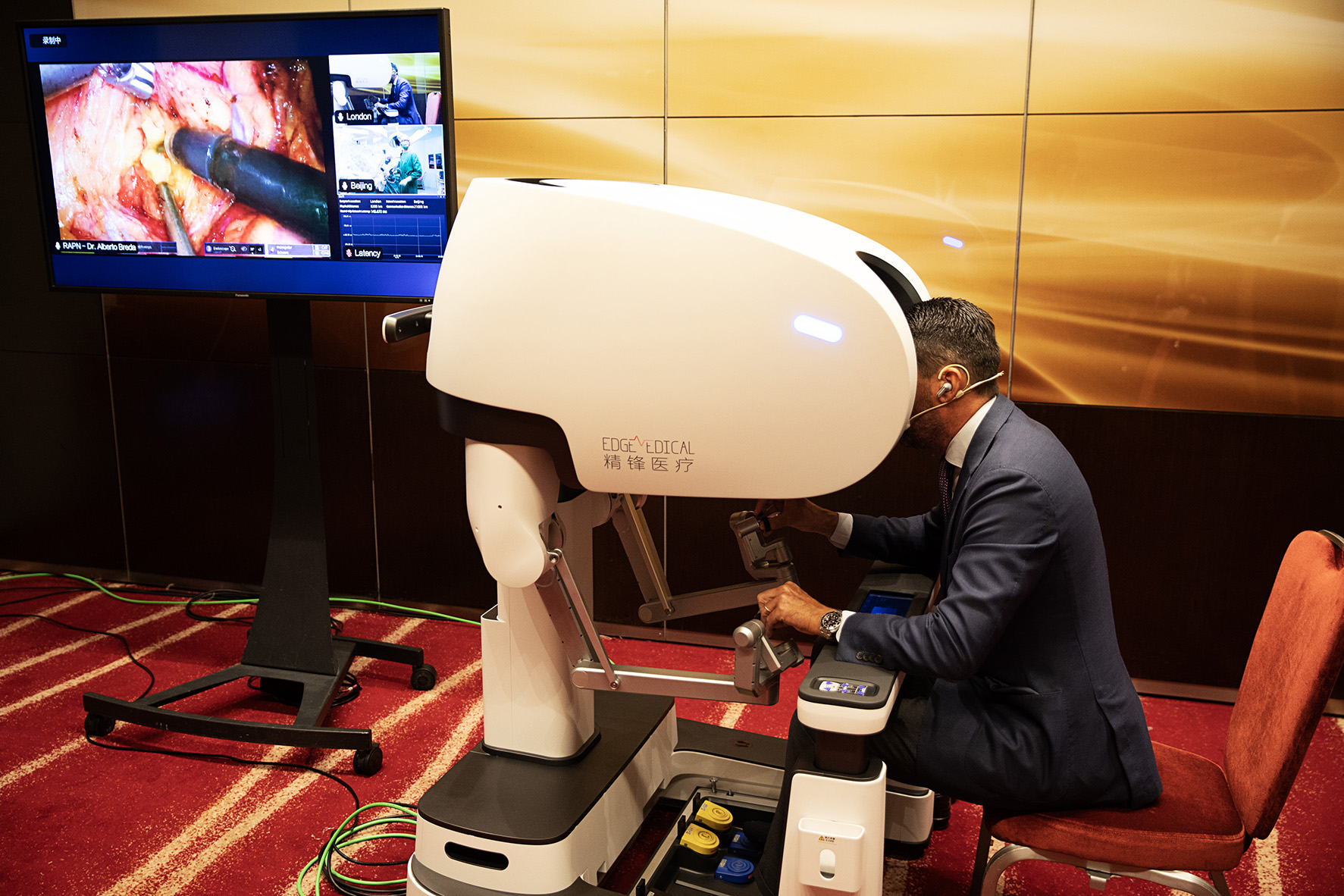
Prof. Breda performs a telesurgical case from the congress venue in London during ERUS25.
A structured programme
“Earlier this year, we established the first structured programme of telesurgery in Europe, connecting Barcelona to the Canary Islands. This is a huge geographical distance (over 2000km) but still within the same country, which simplifies the legal aspect.”
“In the first three months, we have performed 42 cases, with no issues or complications. Patient acceptance is also very high, which somewhat surprised me, but they trust the technology. We are also becoming experienced in dealing with the various connection types that telesurgery can make use of: dedicated lines, via a cloud connection, satellite or 5G or 6G. Each has different advantages and drawbacks and we will be learning more about developments in this underlying technology in Padua.”
Building relationships with Central Asia
“I recently returned from a visit to Tashkent, Uzbekistan where Dr. Tursunkulov hosted us. At ERUS26 I will be performing a telesurgical case from Padua to Tashkent.”
“Tashkent is a technology city, seeing rapid development. The best engineers and talents are there, so it makes sense for us to establish ties with Central Asia. They have fantastic hospitals and they can use our know-how to further improve their training. We will be using all options of tele-assistance, from long-distance mentoring to proctoring.”
The Near Future
“I have three years to go as ERUS chair, but I hope that by 2029, telesurgery will allow us to host an ERUS meeting anywhere in the world. One of the reasons we are still somewhat limited to certain cities and venues is having a mix of systems at local or regional hospitals. With so many different systems on the market, it’s harder to find a physical location that has a good mix. Telesurgery allows us to break free of these logistical challenges while still having all the surgeons in the same place.”
“Ultimately, scientific meetings are social as well: you meet people, talk to other surgeons, make connections. This would allow us to (compliance permitting) go to any kind of meeting destination, bring ten consoles, and offer a great scientific programme without travelling between hospitals or other logistical challenges or inconveniences we currently face.”
- Update, 6 August: The location for the Greek telesurgical case has been changed from Patras to Athens and this article has been updated to reflect that.